Ashtan Mistal

3D Geometry  ·  Computer Vision

Software engineer based in Vancouver who thinks carefully about triangles.

Scroll

I build things
for 3D space.

I'm a software engineer working on 3D geometry and computer vision. I studied physics and computer science at UBC, and got into the field rebuilding the entire campus inside Minecraft from public LiDAR scans. It was meant to be a side project. I ended up demoing it at CVPR 2024, and it set my direction. Everything since has been a more serious version of the same idea: take raw scan data and turn it into geometry you can build on. At Polyga I built scan-to-CAD software for turning massive point clouds into usable CAD models. Now I'm at Dandy, writing CAD algorithms for dental prosthetics.

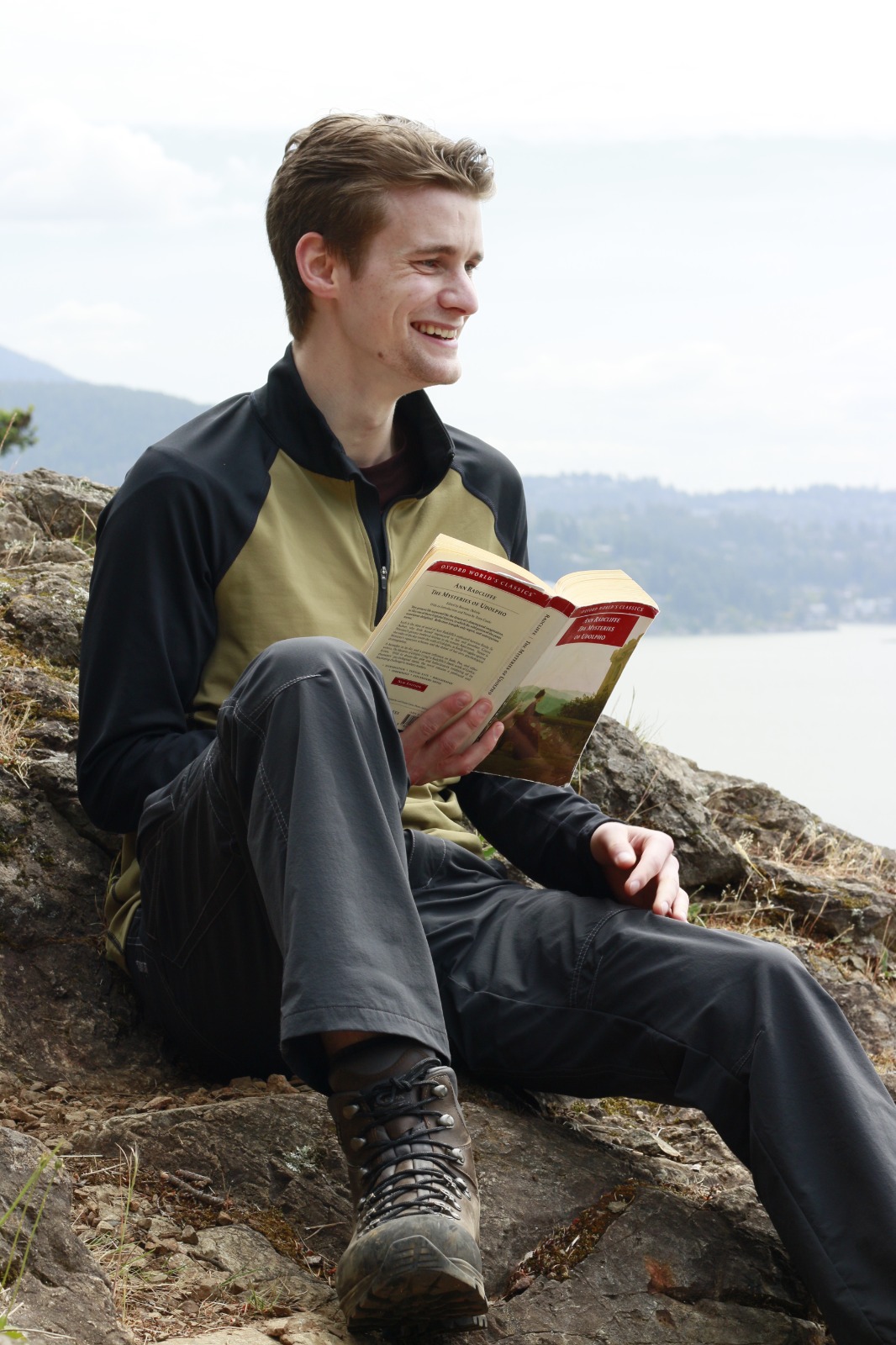
When I'm not writing code, I run, practise Taekwondo, and get absorbed in board games. I'm also an avid reader and am currently reading Ann Radcliffe's The Mysteries of Udolpho.

Nov 2025 — Present Dandy Software Engineer II — CAD / 3D Algorithms

3D geometry algorithms and applications development for dental prosthetics (full and partial dentures). Notable work includes robotic toolpathing algorithms, ICP-based alignment algorithms, jaw deconfliction systems, and more. I'm working across the stack from core geometry libraries, to user-facing design tools, and manufacturing-focused algorithms.

C++ · WebAssembly · TypeScript · Python

Apr 2025 — Nov 2025 Polyga Inc. Computer Vision Software Engineer

Led the full development of Xtract3D 2, a scan-to-CAD SolidWorks plugin for reverse engineering massive point clouds and mesh data into manufacturable CAD geometry. Designed GPU-accelerated selection and slicing algorithms using OpenGL compute shaders, enabling significantly higher performance on datasets exceeding 100M points.

Built adaptive rendering algorithms for efficient editing and real-time visualization of large point clouds, using chunk-based structures and level-of-detail techniques. Led product direction and development for all of Polyga's core software, coordinating roadmaps, feature development, QA, and support.

C++ · OpenGL · SolidWorks API · WebAssembly · Visual Studio

Jun 2024 — Apr 2025 Polyga Inc. Software Engineer (C/C++)

Developed advanced ICP-based point cloud registration algorithms, enabling single-click alignment of noisy scan data with improved accuracy and a 7× speed gain over prior methods. Created and integrated a sparse-view weighted reprojection algorithm for accurate RGB-to-3D-mesh texture mapping on a handheld face scanner.

Key contributor to the software design of an automated laser-line dental crown inspection system, including mesh alignment algorithms and optimized scan processing pipelines.

C++ · OpenGL · Python · pybind11 · Visual Studio

Dec 2023 — May 2024 Mitra Biotechnologies Applied Physics Software Developer (Contract)

Created a web application platform for rapid prototyping and computational modelling of lateral flow assays, built with TypeScript, React, Django, PostgreSQL, and Docker. Designed the project management backend, database schema, and RESTful API.

Utilized OpenFOAM in C++ for fluid simulation in paper-based porous media, using GMSH for quad mesh creation and optimization from user-provided GeoJSON polygons.

Python · C++ · OpenFOAM · GMSH · Django · TypeScript · React · Docker · PostgreSQL

Sep 2021 — Dec 2023 University of British Columbia Undergraduate Teaching Assistant

Taught systematic program design and functional programming to 500+ students across six semesters, providing support through office hours, labs, and forums. Received consistently positive feedback from students in performance evaluations.

2019 – 2023 BSc Computer Science University of British Columbia
2019 – 2023 BSc Physics University of British Columbia
CVPR 2024 · Honorable Mention

MinecraftUBC

A 1:1 digital clone of the UBC campus in Minecraft, built from a multilayered 3D surface reconstruction pipeline. Transformed LiDAR and geospatial wayfinding data into a detailed voxel model of buildings, trees, roads, and water bodies, using point cloud processing, classification, and segmentation. Presented as a technical demo at CVPR 2024, engaging 500+ players and reaching 200k+ social media views.

Forest Friends

Instance segmentation and classification of trees from raw LiDAR data for use in a voxel environment. Implemented a research-based ML pipeline using mean shift clustering and vertical strata analysis, reducing runtime by over 90% while retaining voxel accuracy. Trained a PointNet++ model in PyTorch to classify trees into broad biological families with 89.5% accuracy.

LiDAR-DenseSeg

A deep learning pipeline for point cloud segmentation, densification, and planar flattening, improving mesh and voxel reconstruction quality of LiDAR data, optimized for consumer GPUs. Modified PointNet++ to segment building structures at 95.4% accuracy, and adapted a self-supervised densification network for arbitrary-size point clouds.

Numerical Methods in Radiation Room Shielding

Research into numerical methods for radiation shielding in medical treatment rooms, minimizing dose to non-target areas using Monte Carlo particle-decay simulation. Investigated voxel and polygonal mesh models of room and patient geometry to improve accuracy, and explored GPU acceleration for massive parallelization and reduced runtime over existing treatment-room models. Presented to a panel of physics undergraduates and professors.

Get in
touch.

Always happy to connect, whether it's about geometry, a project, or just to say hi.